Choosing a custom clothing manufacturer starts with five checks: relevant product experience, clear specifications, an approved sample, a complete quotation, and a written production plan. For brands in the US, UK, and Europe, it also means confirming delivery arrangements for the exact country where the order will arrive.
A good first conversation should help you understand what the manufacturer can make, what your order will cost, and what needs approval before production begins. This guide explains what to ask and what to prepare, whether you are developing your first collection or sourcing a new supplier.
1. Match the manufacturer to your product
Start with the garments you want to sell. A supplier’s ability to produce one type of clothing does not automatically establish that it can deliver your particular fit, fabric, construction, or decoration.
Share your product category, reference images, intended customer, and the details that matter most. Ask to see relevant examples and discuss which parts of the work the manufacturer handles directly.
Useful questions include:
- Have you made garments with similar construction and decoration?
- Which production stages do you handle in-house?
- Can you work from our measurements and technical specifications?
- Which details need a sample or trial before they can be confirmed?
LogoSketch provides custom apparel manufacturing in Sialkot, Pakistan, with cut-and-sew production, embroidery, screen printing, and sublimation. Explore our sportswear, casualwear, and fitness wear to find a starting point for your brief.
2. Send a brief that makes your quote meaningful
A request such as “How much for 200 hoodies?” leaves important choices unanswered. Two suppliers could quote different fabrics, fits, decorations, and packaging while appearing to price the same product.
You do not need every detail resolved before making contact. Identify what is decided and what you need help choosing.
| Detail | What to include |
|---|---|
| Garment | Product type, reference images, and intended use |
| Fabric | Preferred composition, weight if known, and desired feel |
| Fit | Measurements, size range, or a reference garment |
| Colours | Number of colours and any colour references |
| Quantity | Total units, with a proposed split by style, colour, and size |
| Decoration | Artwork, placement, dimensions, and preferred method |
| Branding | Label, hangtag, and packaging requirements |
| Destination | Country and delivery postcode or ZIP code |
| Schedule | Desired arrival date and any fixed launch deadline |
A tech pack brings these details together in one document. If you do not have one, send a written brief and images, then ask which additional specifications are needed before sampling.
Ready to discuss your collection? Send LogoSketch your brief with the product, quantity, artwork, and delivery destination.
3. Understand how the minimum order applies
The minimum order quantity, or MOQ, is the smallest order a supplier agrees to produce for a particular specification. Always ask how that minimum is calculated.
For example, a proposed order of 300 garments could mean one style in one colour, or three styles in two colours each. Those are different production requests. A total quantity alone does not tell you whether each variation meets the supplier’s requirements.
Before planning a collection, ask:
- Is the minimum per order, style, fabric, or colour?
- Can sizes be mixed within that minimum?
- Do custom labels or packaging have separate minimums?
- Would simplifying the design or reducing colour options change the quotation?
For a LogoSketch enquiry, request the MOQ for your specific brief. Confirm it in writing before committing to quantities or announcing a launch.
4. Know what your sample proves
A sample is most useful when you understand what it represents. An existing garment can help you examine workmanship and fabric feel. A sample developed to your specifications can help you assess your own design. Ask which details will match the proposed bulk order and which are only illustrative.
LogoSketch advertises a free sample with freight paid by the buyer. Ask which sample is available, whether it is suitable for your brief, and what shipping to your destination will cost. Confirm any separate charges for custom development or revisions before proceeding.
When reviewing a sample, use a written checklist:
- Fit: Compare measured dimensions with your specification and try the garment on an appropriate fit model.
- Construction: Examine seams, hems, closures, and finishing.
- Decoration: Check artwork dimensions, placement, colour, and appearance.
- Wear and care: Evaluate the garment under the intended use and agreed care conditions; record any changes you observe.
- Branding: Check label wording, placement, and packaging against the agreed brief.
Photograph your observations and record revisions in one place. Before bulk production, identify the approved sample and the final specification version so both parties are working from the same reference.
5. Choose decoration around the garment and artwork
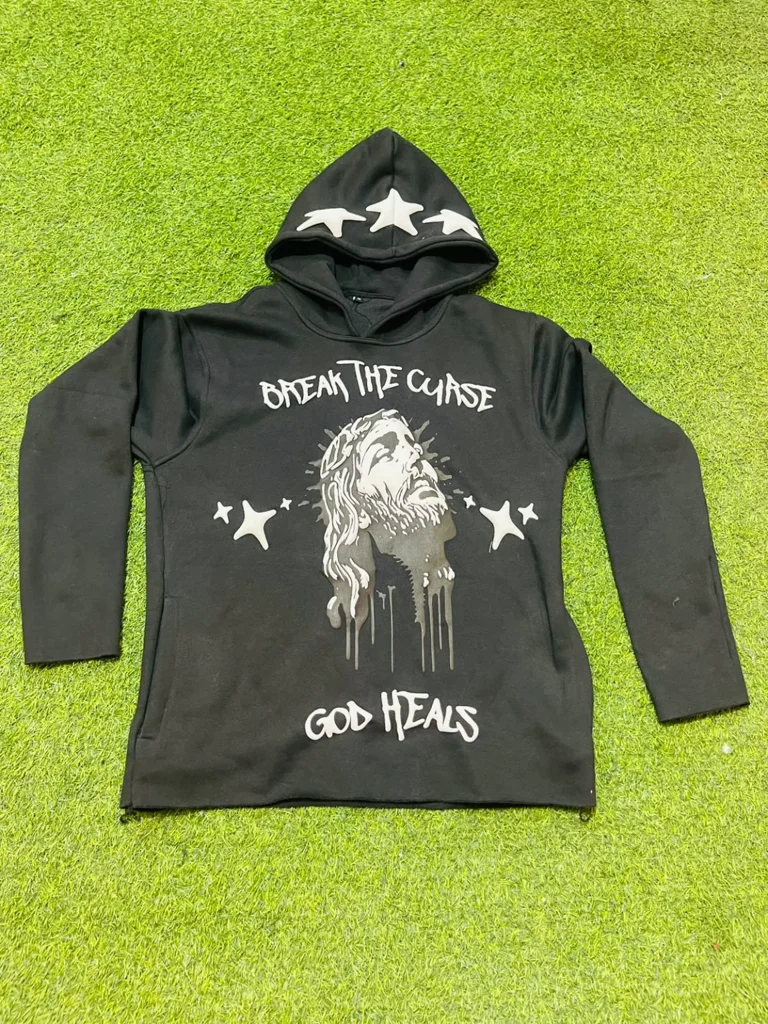
Embroidery, screen printing, and sublimation create different results. Instead of selecting a method from a photograph alone, discuss how it will work with your fabric, artwork, placement, and desired finish.
| Method | What to discuss before approval |
|---|---|
| Embroidery | Logo size, small lettering, stitch coverage, backing, and comfort |
| Screen printing | Artwork colours, print dimensions, fabric compatibility, and desired feel |
| Sublimation | Fabric suitability, colour expectations, placement, and alignment across panels |
Ask to see a relevant example or trial where needed. A digital mockup communicates the design, but a physical sample helps you judge the actual result.
You can review LogoSketch’s manufacturing capabilities before discussing your artwork with the team.
6. Compare complete quotations
Compare quotations against the same written specification. A unit price is only useful when you know what it includes.
Request a breakdown covering garments, decoration, labels, packaging, sample development where applicable, and shipping. Ask the supplier to identify excluded charges and explain payment stages, quotation validity, and how specification changes would affect the price.
For international orders, clarify who arranges transport, who handles import clearance, and which charges are included in the delivery quotation. Confirm destination-specific import costs and requirements with your customs broker or relevant authority before ordering.
Use the exact destination country. “Europe” is not a single delivery or import arrangement, and a quote for one destination should not be assumed to apply to another.
7. Separate production time from delivery time
A production estimate is not necessarily an arrival date. Ask what starts the production clock: payment, material availability, sample approval, or another agreed milestone.
Build your schedule around these stages:
- Brief and quotation agreement.
- Sampling and revisions.
- Written approval of specifications and materials.
- Bulk production and agreed quality checks.
- Dispatch, transport, and destination clearance.
- Receipt and inspection of the order.
Tell the manufacturer your required arrival date at the start. Request a proposed schedule for your actual order and allow time to review samples properly before approving production.
8. Agree how quality issues will be handled
Before placing an order, agree how the finished garments will be assessed against the approved sample and specifications. Discuss measurement tolerances, inspection arrangements, and how discrepancies should be reported.
Ask who your contact will be during production and which updates you can expect. Also clarify the process for investigating and resolving a problem, including the evidence and reporting timeframe required.
Clear written expectations make it easier for both the buyer and manufacturer to address issues consistently.
Frequently asked questions
What should I send a clothing manufacturer for a quote?
Send the garment type, quantity by style and colour, size range, fabric preferences, artwork, branding requirements, delivery destination, and desired arrival date. Include a tech pack if you have one, or reference images and a written brief if you do not.
Can I start without a tech pack?
You can start the conversation with images, measurements, and a written description. Ask what further specifications or development work are needed. Agree the final details before approving a sample or bulk production.
Should I order a sample before bulk production?
A relevant sample helps you assess the garment before committing to a larger order. Confirm whether it demonstrates general workmanship or represents your exact specification, then record any required changes and approvals.
What is LogoSketch’s minimum order quantity?
Request a minimum order confirmation for your specific product, fabric, colour options, decoration, and quantity breakdown. Use that written confirmation when planning your collection.
How does LogoSketch’s free sample offer work?
LogoSketch’s website offers a free sample with the buyer paying freight. Ask which sample is available for your brief and confirm shipping costs. Discuss custom development or revisions separately before assuming they are included.
Start your next collection with a clear brief
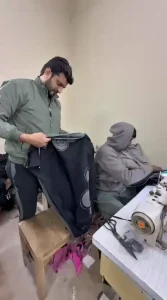
LogoSketch works with brands, wholesalers, and teams on custom apparel made in Sialkot. Explore the founder and production film, then tell us what you want to create.
For a useful first conversation, copy and complete this enquiry:
We are developing {product type} for {customer or intended use}. Our proposed quantity is {units}, across {styles, colours, and sizes}. We would like {fabric, decoration, and branding details}. Delivery is to {country and postcode/ZIP code}, with a desired arrival date of {date}. Please confirm feasibility, the applicable MOQ, sample options and charges, an itemised quotation, and the proposed production and delivery schedule.
Request a custom apparel quote or email info@logosketchmfg.com.